

The Grace of Being Seen
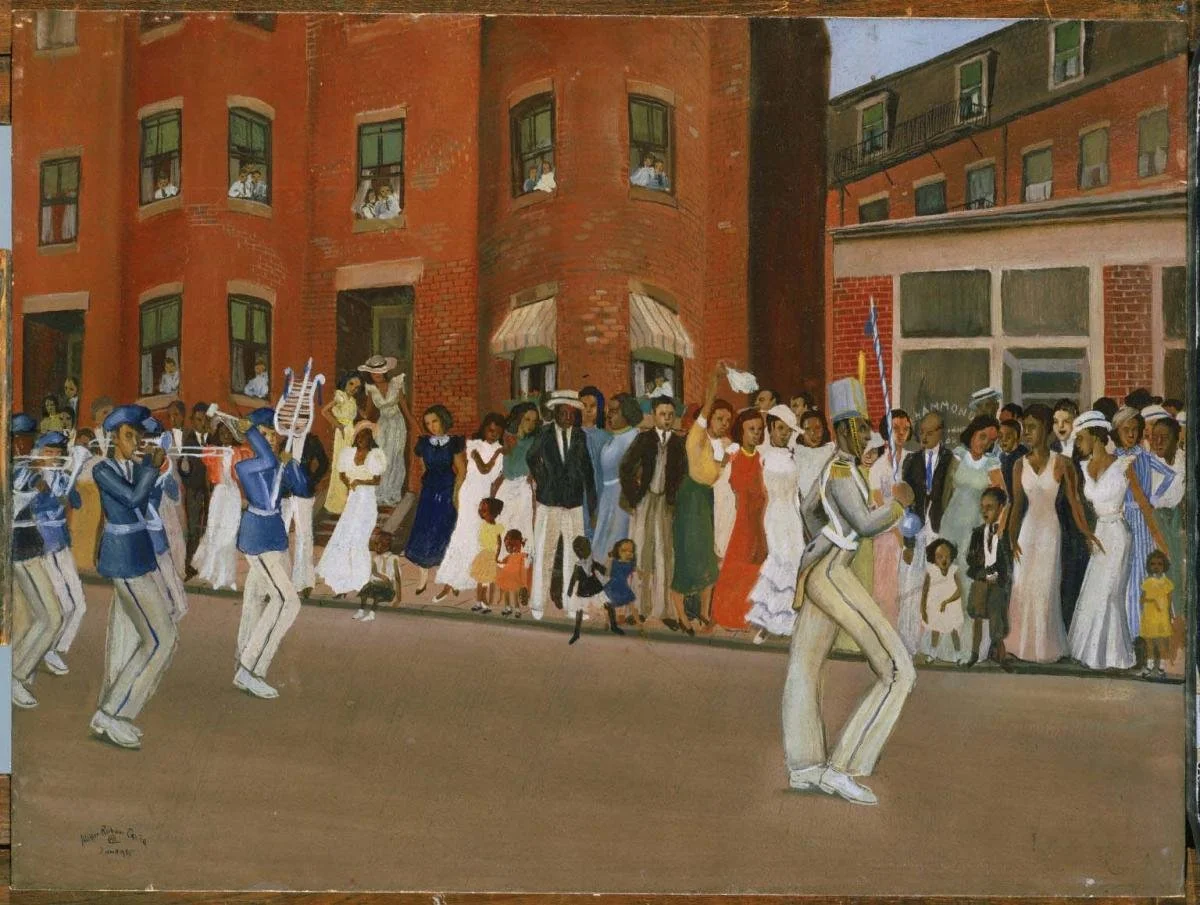
Allan Rohan Crite, Parade on Hammond Street, 1935. Oil on canvas board, 18 x 24 inches. The Phillips Collection, Washington, DC. Acquired in 1942.
I’ve been sitting with the question: What does it mean to be seen? This is the sacred work I return to each time I sit with someone in a spiritual direction session. As a spiritual companion, my role is to help another recognize and follow the movements of grace in their life, so they may discern where God is leading them.
And yet many times, people do not recognize grace when it appears. I understand that deeply, because there were seasons in my own life when the only grace I could name was the thirty-day grace period on a bill.
I have also noticed that when grace is not recognized, it is not easily extended. Grace withheld becomes a brick wall of silence, laid stone by stone, until what should have been a doorway becomes a barrier. And barriers often grow from one-sided perspectives—ways of seeing that do not take in the whole person, but settle for a partial and incomplete picture.
To be seen can mean many things: to be noticed, witnessed, regarded, considered, studied, scanned, or even scrutinized. But not every gaze is loving and not every glance carry understanding. To be truly seen requires grace.
This is what draws me to Allan Rohan Crite’s Parade on Hammond Street. Known as “the neighborhood reporter,” Crite painted Black life in Boston’s South End and Lower Roxbury with tenderness, dignity, and care. In this scene, neighbors line the sidewalks and lean from windows as a marching band passes by. Women wear Sunday hats and long dresses. Brick buildings frame the street. Bright colors rise against the red architecture, and blue threads through the crowd like trust made visible.
Crite painted ordinary Black people doing ordinary things—going to church, gathering, celebrating, belonging. In a world shaped by distortion and stereotype, Crite’s work was a radical act of grace. He refused narrow narratives and offered another perspective: people with joy or hope as they were—whole, active, beautiful, fully human.
Perhaps that is part of our calling, too. To look again at one another with deeper eyes. To resist the easy labels and partial stories. To become people who make doorways where others built walls. To knock down the wall, extend grace to someone in your life who needs to be seen with fresh compassion.
May this month remind us that the grace of being seen is also the grace of seeing others well. May this month remind us to forgive those who have wronged us, letting go of both the wrong and the resentment as Jesus instructed us to pray (Matthew 6:9-13).
Something to think about: Crite painted his community against false narratives. What labels or assumptions have others placed on you that need to be released?
Thanks for reading.
Your heart matters